The Last Word. · Educational Series
From Lincoln’s Train to TikTok Tributes
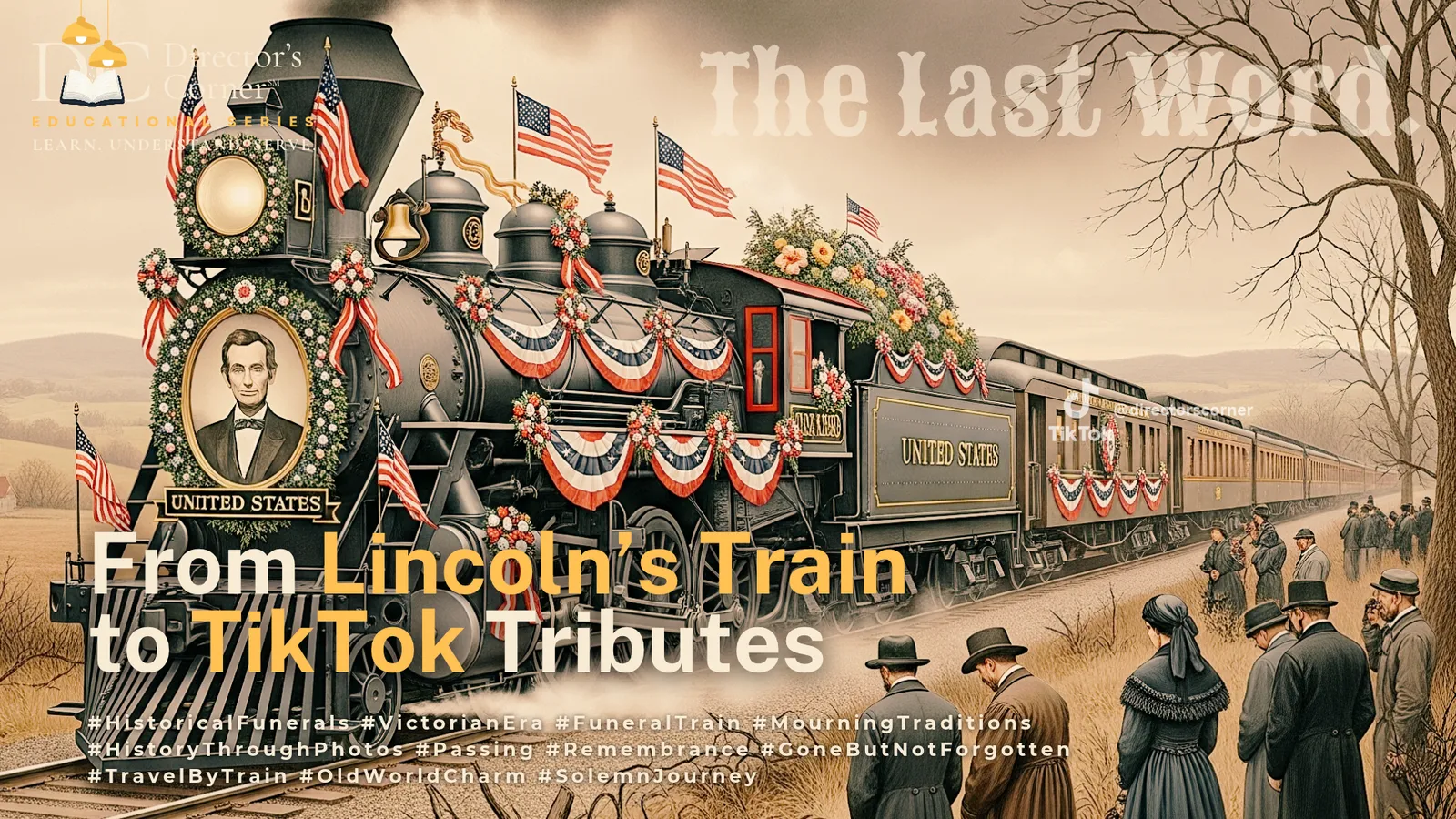
The year is 1865. Abraham Lincoln’s assassination sends a nation into an unprecedented state of grief. To honor their fallen president, a multi-week funeral procession traverses 1,654 miles, stopping in 180 cities. The journey is a masterclass in logistics and public mourning, with millions of Americans viewing the casket and participating in elaborate ceremonies. This event, born of both technological advances (the railroad) and a deeply felt national tragedy, set a powerful precedent for public memorialization. The spectacle was not just about mourning a leader, but about the nation coming together to process a collective trauma.
Fast forward to today. The “consumers” of funeral services—now largely Gen-Z—have a different set of needs and expectations. They are digital natives who live their lives online, and they are driving a new wave of innovation in the funeral industry. For them, authenticity, personalization, and social connectivity are paramount.
The connection between Lincoln’s funeral and modern day funeral trends lies in the fundamental human desire to process grief publicly and collectively. The historical event showed that a large, distributed community could participate in a shared mourning experience. Today, modern consumers are applying the tools and platforms of their generations—social media, streaming, and online communities—to achieve that same outcome.
But they are also demanding two things that were unthinkable in 1865: 24/7 convenience and radical transparency.
The funeral industry, traditionally operating on a 9-to-5 schedule with in-person consultations, is being pushed to adapt. Today’s consumers, accustomed to the instant gratification of e-commerce and on-demand services, are looking for digital platforms where they can get immediate answers and make arrangements at any time of day or night. This has led to the rise of online funeral planning tools that guide users through every step, from selecting a casket to scheduling a service, all from their smartphone. The modern “funeral director” is now a hybrid role, often available via text, chat, or video call long after business hours.
Furthermore, generations like Gen-Z have a deep-seated distrust of traditional institutions and their demand for transparency are changing how funeral homes operate. They want clear, itemized pricing without hidden fees, and they are actively using social media and review sites to find providers who are upfront about their costs and services. The Lincoln funeral, while a public spectacle, was organized behind closed doors. Today, consumers are forcing funeral and cremation providers to pull back the curtain, insisting on access to information and a clear understanding of the options available to them. This has forced the industry to move away from opaque, “packaged” services and toward a model of open pricing and customizable, à la carte offerings.
Today’s generations are not just consumers of funeral services; they are catalysts for change. By prioritizing convenience and transparency, they are forcing the industry to modernize its business practices and customer service, fundamentally shaping what a “funeral” means for the 21st century.
How Will You Stand Out to Today’s Consumers? What Will Set You Apart?
Angela Human
CEO & Founder, Director’s CornerSM